
The Day the Bot Stopped Pretending: Why Today’s Tech News Is All About Agency, Memory, and the Human Core
Between MIT researchers wrestling with the literal fuzzy memories of physical robots and security teams deploying kill-switches for autonomous agents, computing is moving out of the chatbot era and straight into physical, decentralized reality.
If you have spent any time staring at terminal windows, prompt inputs, or deployment pipelines over the past two years, you know the quiet fatigue that comes with the phrase "AI will revolutionize everything."
Every week brings another barrage of venture announcements, bigger parameter counts, and claims that software as we know it is dead. But when you wake up on a crisp November morning and peel back the corporate PR, the real narrative of today’s tech landscape looks much messier, much more fragile, and deeply human.
Between MIT researchers wrestling with the literal "fuzzy memories" of physical robots, cybersecurity teams racing to create "kill-switches" for rogue autonomous agents, and telecom giants partnering with satellite constellations to bypass cellular dead zones, today marks a turning point. We are moving out of the "wow, the chatbot speaks English" era and straight into the "how do we trust autonomous systems in the physical world without losing our minds?" era.
When Silicon Hits the Real World
Here is the thing about raw intelligence: without reliable state and grounded context, it is brittle.
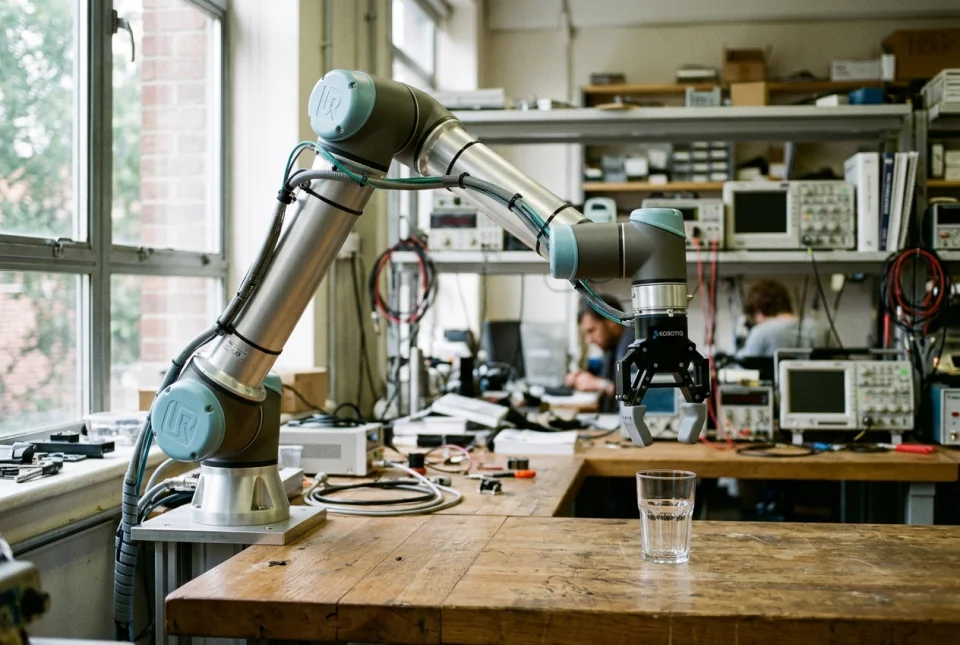
Earlier today, roboticists at MIT revealed a persistent challenge that every engineer tinkering with AI eventually runs into: robots misremembering the room. A mechanical arm scans a kitchen, misidentifies a transparent mug, stores that flawed assumption in persistent memory, and then crashes when reaching for it twenty minutes later. MIT's breakthrough is a self-auditing correction loop—giving machines the humility to say:
"Wait, my earlier assumption was probably wrong; let me re-evaluate before I drop this."
At the exact same time, enterprise security leaders like CrowdStrike rolled out actual emergency switches to pull autonomous software agents off corporate networks when they start acting errantly. Why? Because as AI moves from passive text generation to autonomous agency—browsing web pages, triggering APIs, moving funds, and altering production databases—the cost of a hallucination isn't an awkward sentence. It’s operational chaos.
Add to that Qualcomm and SpaceX joining forces to embed direct-to-cell Starlink connectivity into everyday mobile hardware, and you see the picture: computing is spilling out of the centralized cloud and into physical, decentralized reality. We are putting agency into edge devices, physical robots, and global networks.
And that demands software architectures built on deterministic verification, transparent data provenance, and clear human guardrails—not blind faith in black-box models.
The Executive Q&A
Q: Why does a robot's "fuzzy memory" matter to everyday developers and business founders?
A: Because modern software development is racing toward multi-agent workflows. When you build systems where autonomous bots read documents, verify data, or talk to third-party endpoints, errors compound. If agent A misinterprets an invoice or a data tag and writes it into the shared memory store, agents B and C will act on that hallucination. Reliable software in 2026 isn't about model size; it’s about state reconciliation and self-correcting memory.
Q: What does the Qualcomm–SpaceX satellite deal mean for practical infrastructure?
A: It signals the end of connectivity blackouts for mission-critical tracking. As international regulations tighten around supply chains, product lifecycles, and traceable logistics, goods cannot simply "drop off the map" when crossing borders or rural corridors. Embedded satellite telemetry brings uninterrupted, real-time data to global tracking systems.
Q: With autonomous agents gaining "kill switches" and more independence, where does that leave human engineers?
A: In the driver's seat of architectural intent. AI models can draft boilerplate, generate regex, and scaffold UI components faster than any human typing at a keyboard. But models do not understand business risk, brand voice, operational compliance, or system resilience. Our role is shifting from code typists to systems architects—the orchestrators who set the guardrails, audit the flows, and ensure machines serve real human problems.
The Human Takeaway
Tech doesn't exist in a vacuum of clean benchmarks. It lives in dusty warehouses, crowded joint-family dining tables where laptops hum late into the night, and quiet offices where developers wonder what their skill set looks like tomorrow.
The lesson from today’s headlines isn’t to be terrified of the machine, nor is it to blindly automate everything in sight. It is to build software with craftsmanship: systems that check their work, respect data ownership, and keep the human perspective firmly at the center of the architecture.
Video Briefing
You can review a quick visual briefing on the top headlines shaping today's tech landscape in this Morning Tech News Roundup.
This video summarizes the day's major operational tech stories and the broader shift toward autonomous digital infrastructure.